


Yes, magnetic charging can work through a phone case, but the result depends on the case’s thickness, material, and magnetic design. This has become a more relevant question as wireless charging keeps advancing. The Wireless Power Consortium says Qi v2.2.1, now branded as Qi2 25W, launched in July 2025, bringing Qi 2.2 wireless charging to up to 25W and introducing technical improvements aimed at better power transfer and loss control. In practice, that means alignment and case compatibility play an even bigger role in charging performance.
In the sections below, we will look at how different phone cases affect magnetic charging, how to check whether your case is compatible, and how to get more stable charging in daily use.
How Magnetic Charging Works Through a Phone Case
Before looking at which cases work well and which do not, it helps to understand why a phone case affects magnetic charging in the first place. Once the charging mechanism is clear, the differences between case types become much easier to judge.
Magnetic charging combines wireless power transfer with magnetic alignment, which is why it now appears in products ranging from a Qi wireless charger to a portable charger or other designs. The charger creates an electromagnetic field, and the phone receives that energy through a charging coil inside the device. The magnets help keep the phone and charger properly aligned, which is important because wireless charging works best when the coils are lined up correctly.
A phone case sits between the charger and the phone, so it can affect both magnetic strength and charging performance. That means magnetic charging through a case is not just about whether the charger can attach. It also depends on whether the case still allows proper alignment, a stable connection, and efficient power transfer.
How Different Types of Phone Cases Affect Magnetic Charging

With the charging mechanism in mind, the next step is to look at why some phone cases work better than others. For iPhone 12 through iPhone 17 models, the key factors are usually case thickness, structure, and materials, since these phones already have built-in magnetic rings. For phones without built-in magnetic rings, magnetic charging usually needs a case with a dedicated magnetic ring.
Thin Standard Cases
Thin standard cases usually work best with magnetic charging because they add only a small amount of extra distance between the charger and the phone. In practical terms, cases around 1 mm to 2 mm thick are often considered thin enough to maintain a secure magnetic hold and stable coil alignment in everyday use. That usually means users can leave the case on without seeing much change in charging convenience.
Even so, slimness alone does not guarantee good performance. A thin case can still have a weaker magnetic connection if it does not include built-in magnets or if those magnets do not line up properly with the charger and the phone. So while a thinner case generally improves the odds of reliable charging, overall compatibility still plays an important role.
Thick Protective Cases
Thick protective cases do not always interfere with magnetic charging, but they are more likely to cause problems when they add too much thickness across the back. In practice, once the back section gets much beyond about 2 mm, magnetic alignment and charging stability are more likely to weaken, especially if the case does not have built-in magnets.
Reinforced corners usually matter less on their own, while a thicker back panel is more likely to reduce magnetic hold and make charging less stable.
Wallet and Accessory Cases
Wallet cases and accessory cases are often the least compatible with magnetic charging. Card pockets, foldable flaps, kickstand structures, and extra layers on the back can interfere with the magnetic connection and create uneven spacing between the phone and charger.
Even if charging starts, the connection may be less stable than with a simple case. In some situations, the phone may charge only when placed very carefully, which makes everyday use less convenient.
If a user wants magnetic charging to feel quick and effortless, wallet-style cases are usually not the best choice unless the product is specifically designed with magnetic charging in mind.
Case Materials That Affect Magnetic Charging
Case material can also make a noticeable difference in how well wireless charging works. Soft silicone, TPU, and thin plastic generally interfere less with magnetic charging, especially when the case is not overly thick. These materials usually allow enough magnetic strength and wireless power transfer for normal use.
By contrast, metal elements, very dense multi-layer constructions, and some heavily padded designs can reduce charging performance. Materials themselves are not always the only issue. The total structure of the case matters too, including thickness, back panel design, and whether there are magnets built into the case.
In simple terms, the more the case adds distance or blocks clean alignment, the more likely it is to weaken magnetic charging performance.
How to Tell If Your Phone Case Supports Magnetic Charging

Since not every case performs the same way, it is useful to know how to check whether your case actually supports magnetic charging.
Check for Magnetic Charging Compatibility
The first step is to check whether the case is actually designed for magnetic charging. Product descriptions often mention terms such as magnetic charging compatible, MagSafe compatible, or Qi2-ready support. If the brand clearly states that the case works with magnetic chargers or magnetic power banks, that is usually a good sign.
You can also look at the structure of the case itself. Many compatible cases include a visible magnetic ring or built-in magnet array that helps the charger lock into the correct position. Without that support, even a case that feels thin may still provide a weaker attachment.
Test the Charging Performance
Labels help, but real-world use tells you more. The best way to judge compatibility is to turn on the magnetic charger and check whether the phone can connect and charge normally with the case on. For example, a magnetic power bank like the INIU SnapGo P73 Magnetic Slim Power Bank can show whether your case still supports stable attachment, reliable charging, and comfortable handheld use.
The INIU SnapGo P73 Magnetic Slim Power Bank is a practical option for this kind of test because it combines a slim magnetic design with Qi2-certified 15W wireless charging, a 10000mAh capacity, a built-in stand, and the portability users expect from a small power bank for daily carry.
That means you are not just checking whether the charger attaches, but also whether your case still supports stable snap-on use during normal activities like holding the phone, walking around, or watching videos. If the charger stays aligned and charges consistently in those situations, your case is likely compatible enough for everyday magnetic charging.

This kind of testing is more useful than checking whether the charger sticks for a few seconds.
Review the Case Design
Beyond labels and charging tests, it also helps to review the case design closely. Look at how thick the back panel is, whether the camera bump lifts the phone unevenly, and whether the case includes extra features that create spacing between the phone and charger.
A flat, simple back design usually works better than one with folds, card slots, thick decorative layers, or uneven attachments. Even small design changes can affect alignment enough to make charging less consistent.
Tips to Improve Magnetic Charging With a Phone Case
If you would rather keep using your current case, a few practical adjustments can still help make magnetic charging more stable, reliable, and convenient in daily use.
Use a Reliable Magnetic Charger
Using a reliable magnetic wireless charger is one of the easiest ways to improve charging consistency with a phone case. A well-designed wireless charger can provide stronger magnetic alignment, more stable coil positioning, and more consistent power delivery, all of which help reduce the chance of weak attachment, slower charging, or accidental disconnects when a case is involved.
The INIU SnapGo W31 3-in-1 Magnetic Foldable Wireless Charger is especially useful for users who want a cleaner and travel setup. Its foldable 3-in-1 design can charge an iPhone, Apple Watch, and AirPods in one place, which makes daily charging more convenient while reducing cable clutter. Because it combines magnetic alignment with Qi2-certified 15W charging, it can help maintain a steadier connection through a compatible case. For users who charge overnight or keep a charger on the desk every day, that added consistency can make a noticeable difference.
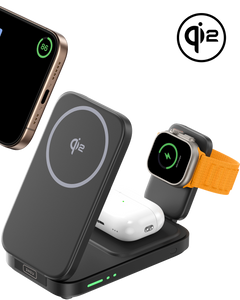
INIU SnapGo W31-E1 Qi2 15W 3 w 1 magnetyczna składana ładowarka bezprzewodowa
Improve Charger Alignment
Better alignment can also improve charging consistency. While magnetic power banks help with positioning, chargers with a wider charging area can still make daily use easier. The INIU I211 Qi-Certified Wireless Charger is a good example, since its dual-coil design helps create a more forgiving charging zone.
The INIU I211 Qi-Certified Wireless Charger is a useful option for users who want a charger that is easier to use in everyday settings. Its dual-coil design creates a wider charging area, which helps when a phone case slightly shifts the phone or makes exact placement harder than usual. It also supports fast wireless charging and includes a sleep-friendly adaptive light, making it a practical fit for desks and nightstands. In other words, a charger with a flexible design can still make charging through a case feel easier and more stable.

Choose a Compatible Phone Case
If magnetic charging is something you use often, then the most effective solution is choosing a case that is built for it. A slim case with wireless-charging support and proper magnetic alignment usually gives a much better experience than trying to force compatibility from a case that was never designed for this kind of charging. In the long run, that often matters more than chasing small fixes.
FAQ
Does magnetic charging damage a phone battery?
No, magnetic charging itself does not damage a phone battery under normal use. What matters more is heat, charging quality, and battery management. Well-designed wireless chargers and phones are built to regulate power and temperature automatically.
However, poor alignment or a very thick case can create more heat and reduce charging efficiency, which is one reason it helps to use a compatible case and a reliable charger.
Is it better to charge your phone wirelessly or with a cable?
That depends on what you care about more. A cable is usually better for maximum speed and energy efficiency, especially when paired with a fast charger, while wireless charging is better for convenience and quick top-ups throughout the day. Magnetic charging improves the wireless experience because the magnets help keep the charger aligned, which makes charging easier and more consistent than on a basic non-magnetic pad.
Is magnetic charging the same as MagSafe?
Not exactly. Magnetic charging is the broader concept of using magnets to align a wireless charger with a phone. MagSafe is Apple’s branded version of that idea, while Qi2 and Qi2.2 are broader industry standards for magnetic wireless charging.
In real use, they can feel similar because all rely on magnetic alignment, but MagSafe belongs to Apple’s ecosystem, while Qi2 and Qi2.2 are designed for wider compatibility across devices and accessories. Qi2.2 also builds on Qi2 with support for higher power and a more advanced magnetic charging experience.
Is it okay to leave phone on wireless charger overnight?
Usually yes, if you use a reliable charger and your phone supports safe charging management. Modern phones are designed to reduce overcharging risk, but heat still matters. Thick cases, poor alignment, or limited airflow can make overnight wireless charging less efficient or warmer than it should be.
Conclusion
Magnetic charging works through many phone cases, but some cases perform better than others. Thin, flat, magnet-compatible cases usually work best, while thick, wallet-style, or bulky designs are more likely to interfere. For the most reliable experience, use a compatible case, a well-designed charger, and proper alignment.
