


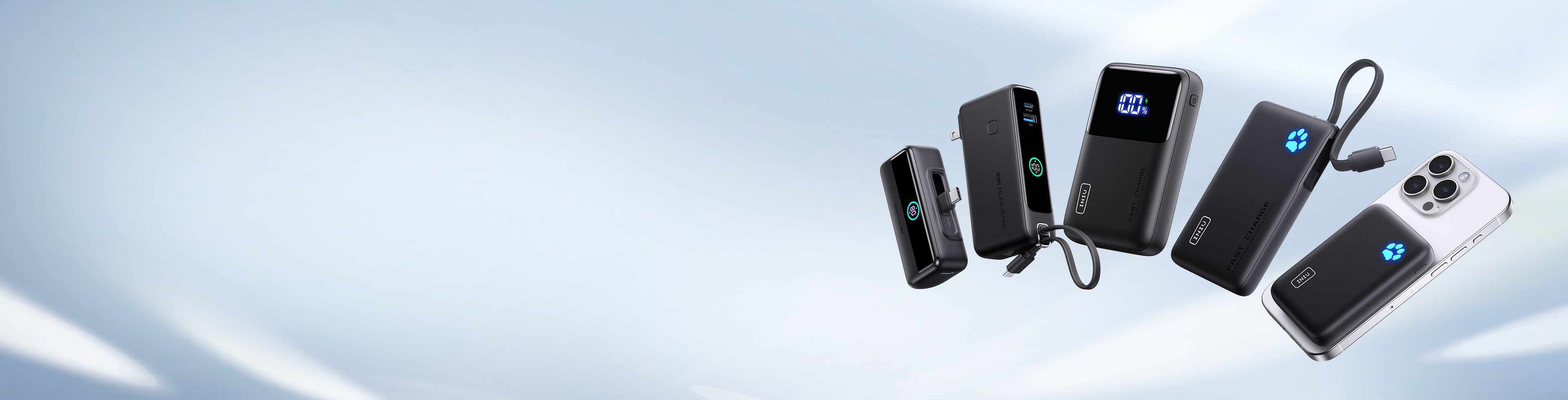
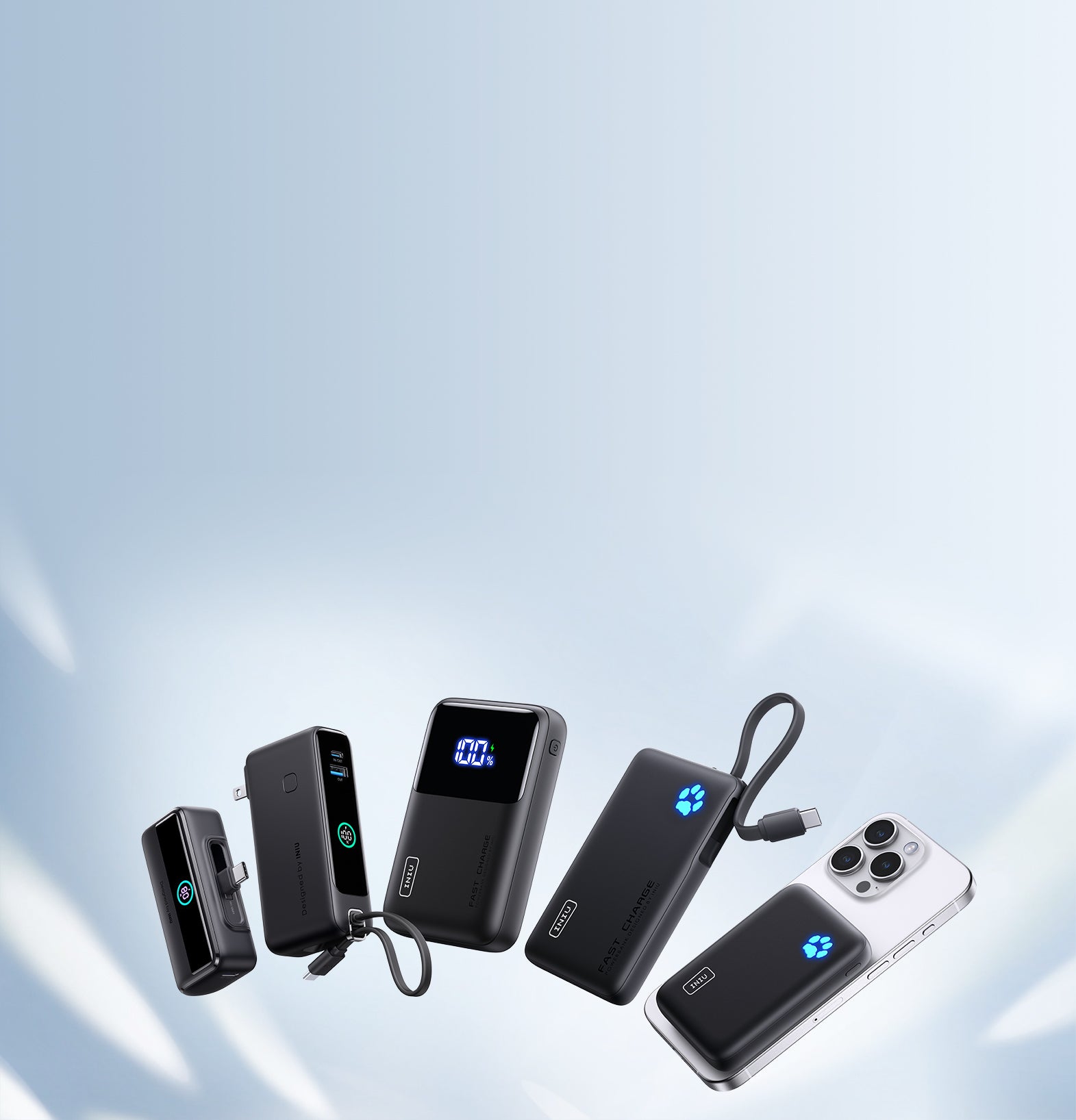
Portable Power Bank
Best Sellers

INIU Batería externa Cougar P63 para portátil, la más pequeña, de 25000 mAh y 100 W.


INIU Batería externa Pocket Rocket Mini de 10000 mAh y 45 W

INIU Batería externa magnética SnapGo de 10000 mAh y 15 W, compatible con Qi2 y MagSafe.

-
SAVE 11%
 Best Seller
INIU Batería externa Cougar P63 para portátil, la más pequeña, de 25000 mAh y 100 W.
$89.99$100.99Oferta -
Highly Recommended
INIU Batería externa Cougar para portátil, 25000 mAh, 140 W, carga rápida.
$99.99$117.99Agotado -
-
Agotado
-
Agotado
-
Oferta
-
Best Seller
INIU Batería externa Cougar para portátil, 27000 mAh, 140 W, carga rápida.
$89.99$120.31Agotado -
Agotado
-
Oferta
-
-
 Agotado


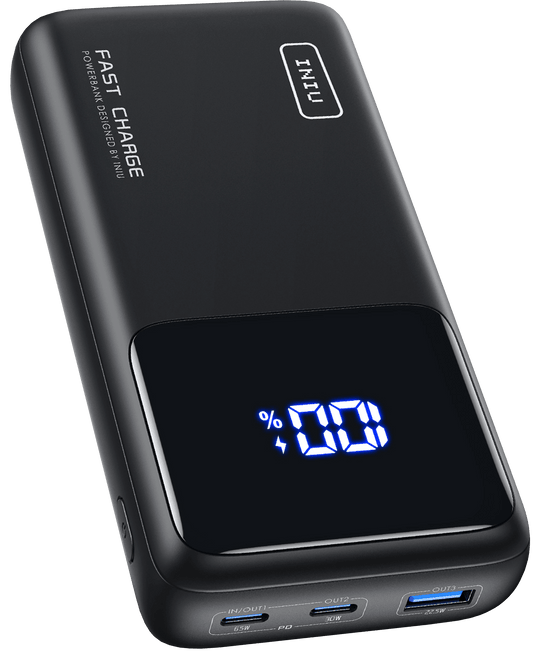
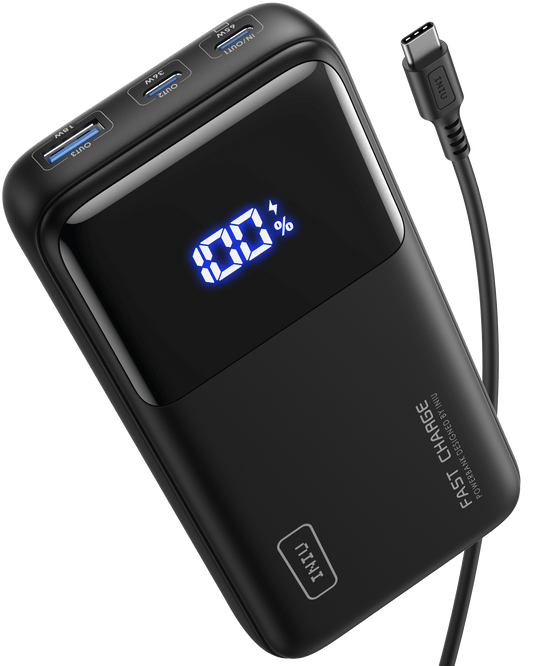

¿Por qué elegir un? INIU ¿Banco de energía portátil?
Experimenta el INIU Ventaja: Impulsa tu mundo con confianza.
En INIU, creemos que su batería externa debe ser tan dinámico y confiable como tú. Por eso cada INIU cargador portátil Está diseñado con precisión e innovación, centrándose en las características más importantes para el uso diario.
¿Qué hace? INIU una elección práctica
|
Lo que importa |
Por qué es importante |
Qué INIU ofertas |
|
Carga rápida |
Ayuda a reducir el tiempo de inactividad durante los días ajetreados, los viajes y las recargas rápidas. |
Admite carga rápida PD y QC |
|
Portabilidad compacta |
Más fácil de llevar en una mochila, equipaje de mano, bolso de trabajo o bolsillo. |
Diseños pequeños y ligeros para uso diario. |
|
Protección de seguridad |
Aumenta la confianza durante la carga diaria repetida. |
Sistemas SmartProtect y funciones de seguridad multicapa |
|
Rendimiento fiable |
Permite una carga más uniforme a lo largo del tiempo. |
Construcción duradera, suministro de energía estable y 3 años de garantía. |
|
Compatibilidad de dispositivos |
Facilita la carga de más dispositivos de uso diario. |
Opciones USB-C y USB-A en varios modelos. |
Cómo elegir el correcto INIU ¿Batería externa portátil?
📱 Para llevar a diario y recargar el móvil rápidamente:
Si principalmente necesita energía de respaldo para viajes al trabajo, recados o uso diario, un mini batería externa o un cargador portátil delgado suele ser la mejor opción. Es más fácil de transportar y te da batería adicional sin agregar mucho Weight o a granel.
✈️ Para viajes y días prolongados lejos de un enchufe:
Si a menudo pasas largas horas lejos de un cargador, alto-Capacity batería externa Tiene más sentido. Te proporciona más energía de respaldo para vuelos, viajes por carretera, días de viaje intensos y periodos prolongados fuera de casa o la oficina.
💻 Para tabletas y portátiles:
Si planeas cargar dispositivos más grandes, no te fijes solo en el tamaño. Un cargador portátil para portátiles o tabletas debería ofrecer mayor potencia y más batería. Capacityespecialmente cuando necesitas energía fiable en cualquier lugar.
🧲 Para cargar tu teléfono cómodamente estés donde estés:
Si la comodidad es lo más importante, una batería externa magnética puede ser una opción práctica para el día a día, especialmente para los usuarios de iPhone. Facilita la carga de teléfonos compatibles y resulta ideal para quienes buscan una solución práctica y con menos cables.
🔌 Para cargar varios dispositivos a la vez:
Si sueles llevar contigo un teléfono, auriculares, tableta o reloj inteligente, un cargador portátil con carga para varios dispositivos puede ser una opción más inteligente. El equilibrio adecuado de la batería Capacity y la configuración de puertos facilita la carga de varios elementos esenciales a la vez, y muchos INIU Las baterías portátiles están diseñadas con salida multipuerto para facilitar una carga diaria más cómoda.
La mejor batería externa portátil no es simplemente la que tiene más potencia. Es la que mejor se adapta a tus dispositivos, a tu rutina diaria y a cómo los cargas a lo largo del día..
FAQ about Banco de energía portátil
When selecting a portable power bank, consider these key factors:
- Battery Capacity (mAh): Determines how many times it can charge your devices. A 10,000mAh power bank typically provides 1–2 full smartphone charges, while a 20,000mAh model can power a laptop for once or power multiple devices.
- Port Types: Look for USB-C PD output for universal compatibility, especially if you need to charge a laptop with a portable charger. Legacy USB-A may still be useful for older devices.
- Charging Speed: Choose models supporting Power Delivery (PD) or Quick Charge (QC) for fast charging. Power banks with the latest version of PD and QC fast charging functions can input power to devices faster. For example, INIU P50-E1 45W PD3.0 power bank can charge an iPhone 16 from 0–63% in ~25 minutes.
- Size & Portability: Pocket-sized or mini models are easier to carry but but have relatively small capacity. Power banks with a capacity of 2000mAh and above can provide more power, but they are also larger and heavier. INIU is committed to providing consumers with more compact power banks to reduce the burden of carrying.
- Safety: Prioritize products with thermal protection, over-voltage/over-current control. INIU's smart protect system and industry-leading 3-year warranty service allow consumers to shop with confidence..
A power bank’s lifespan depends on battery quality and usage. Most lithium-polymer or lithium-ion models last 500–1000 charge cycles (≈2–3 years of typical use). High-quality power banks often use Grade A cells, which maintain over 80% capacity after 500 cycles.
Please avoid full discharges (0%) and extreme temperatures to extend life.
The recharge time depends on two things:
- Capacity (mAh): More capacity means longer charging time.
- Input rating: A USB-C PD input (e.g., 18W–30W) will charge a 10,000mAh portable charger in ~2–3 hours, while a 20,000mAh unit may need 4–6 hours.
- Note: Using a old low speed charger can double or triple the time of recharge power bank.
It depends on your charging priorities:
- Wired power banks are generally faster and more efficient. With USB-C PD fast charging, they can deliver up to 140W, making them ideal to charge laptops, tablets, and phones quickly.
- Wireless power banks offer the convenience of cable-free charging, especially useful for iPhone, Samsung, and Galaxy phones that support Qi or MagSafe. However, they are typically less efficiency than wired power banks due to energy loss during transmission. Newer Qi2-certified magnetic chargers improve wireless performance with better alignment and up to 15W output.
Recommendation: For high-power needs (e.g., laptops or other high performance devices), choose a wired portable power bank. For those who are looking for convenience and use iPhone 12 + of Apple mobile phones, a Qi2 wireless magnetic charger may be a good companion.
Yes — but only with a high-wattage portable charger that supports USB-C PD ≥ 30W.
For example, to charge a light MacBook Air, you’ll need a charger outputting ≥30W, but for MacBook Pro 14"/16", aim for ≥65–140W. Battery capacity is recommended to be 20,000mAh or higher to provide meaningful runtime.
Check your laptop’s input spec (usually printed near the USB-C port or power brick) before purchasing.
Yes — but with these conditions:
- Must be in carry-on luggage (not checked baggage).
- Capacity must be below 100Wh (≈27,000mAh at 3.7V nominal voltage).
- Some airlines limit to two power banks per person, so always check specific rules.
All INIU models under 27,000mAh are compliant with most airlines follow TSA, IATA, and ICAO regulations.
Note: Regulations vary by region and airline; please check the specific regulations of your carrier before traveling.
Yes. Most modern portable power banks support:
- Multiple output ports (e.g., USB-A + USB-C)
- Simultaneous wired + wireless charging (on models with Qi wireless charging)
However, total output is usually shared — e.g., a 45W charger may deliver 30W + 15W when using two ports.
To help keep your portable battery charger and devices at a suitable temperature, charge them in a cool, well-ventilated place and avoid using them under pillows, in bags, in direct sunlight, or inside a hot car. If you are fast charging or powering larger devices, some warmth is normal, but good airflow can help reduce heat buildup. Using a compatible cable and wall charger can also support more stable charging and help prevent unnecessary heat caused by poor connections or mismatched accessories.
If you mainly use a power bank and phone for daily commuting or short trips, a 10000 mah power bank is usually the better choice because it’s lighter and easier to carry.
If you travel frequently, use multiple devices, or need longer backup power, a 20000 mAh power bank is more suitable. INIU focus heavily on portability in their designs, using technologies such as TinyCell to make power banks smaller and lighter than traditional models, even at higher capacities.
The right output wattage depends on the device you want to charge. Phones usually work well with around 18W to 30W, while tablets often benefit from about 20W to 45W for faster charging. For USB-C laptops, lighter models may charge with 30W to 65W, but many larger or higher-performance laptops work better with 65W to 100W.
If you want one portable charger for a laptop as well as smaller devices, a higher-output option like the INIU Cougar P63 100W High Capacity Laptop Power Bank is often a more practical choice.
